
Quantum Computer Technology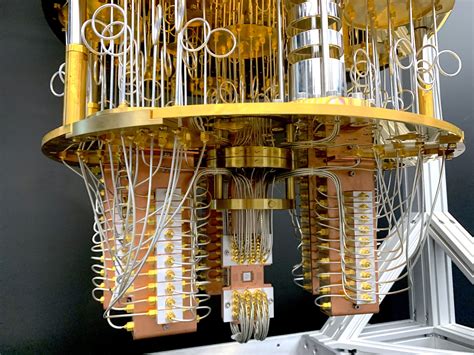
Quantum Computer Technology
Hello, how are you? Greetings to all tech enthusiasts and curious minds eager to explore the frontier of computing. Quantum computer technology is rapidly transforming the landscape of what machines can achieve, promising unprecedented processing power and solving complex problems beyond the reach of classical computers. Greetings as we delve into the fascinating world where quantum mechanics meets information science. Please continue reading to discover how this groundbreaking technology is shaping our future.
Understanding the Basics of Quantum Computing
Quantum computing is a revolutionary field that leverages the principles of quantum mechanics to process information in ways that classical computers cannot. Unlike traditional bits, which represent either a 0 or 1, quantum bits or qubits can exist in multiple states simultaneously thanks to a property called superposition.
This allows quantum computers to perform many calculations at once, potentially solving complex problems much faster than classical machines. Another key concept is entanglement, where qubits become interconnected so the state of one instantly influences the state of another, regardless of distance.
Quantum algorithms exploit these properties to tackle tasks such as cryptography, optimization, and simulation of molecular structures that are currently challenging for classical computers. Although practical quantum computing is still in early stages, understanding these basics is essential to appreciate its future impact on technology and science.
Key Principles Behind Quantum Computer Functionality
Quantum computers operate on the fascinating principles of quantum mechanics, leveraging phenomena such as superposition and entanglement to process information in ways classical computers cannot. Unlike classical bits, quantum bits or qubits exist simultaneously in multiple states, enabling parallel computation at an unprecedented scale.
Entanglement creates a unique connection between qubits, allowing instantaneous correlations regardless of distance, which enhances computational power. Quantum interference is harnessed to amplify correct solutions while canceling out incorrect ones, optimizing problem-solving efficiency.
Additionally, quantum gates manipulate qubits through precise operations, forming the building blocks of quantum algorithms. The delicate nature of qubits, however, demands error correction and isolation from environmental noise, posing significant engineering challenges.
Together, these principles form the foundation for potentially transformative advancements in cryptography, optimization, and complex simulations, marking a new era in computational capability.
Major Milestones in Quantum Computing Development
Quantum computing has evolved significantly since its conceptual inception in the 1980s. One major milestone was Richard Feynman’s proposal in 1982, suggesting that quantum systems could simulate physical processes more efficiently than classical computers.
In 1994, Peter Shor developed a quantum algorithm that could factor large numbers exponentially faster than classical methods, sparking intense interest in quantum cryptography and computation. The early 2000s saw the first experimental demonstrations of quantum bits, or qubits, using trapped ions and superconducting circuits.
Google’s 2019 announcement of achieving quantum supremacy marked a pivotal moment, showcasing a quantum computer completing a specific task beyond classical capabilities. Today, ongoing advances continue to push the boundaries of qubit coherence, error correction, and scalability, paving the way for practical quantum computing applications.
Quantum Bits Versus Classical Bits Explained
Quantum bits, or qubits, differ fundamentally from classical bits by harnessing the principles of quantum mechanics. While classical bits can only exist as a 0 or 1, qubits can represent both states simultaneously through superposition, enabling vastly more complex computations.
Additionally, qubits can be entangled, meaning the state of one qubit instantly influences another, regardless of distance. This unique behavior allows quantum computers to solve certain problems exponentially faster than classical counterparts.
However, qubits are also more fragile and prone to errors due to environmental interference. Understanding these distinctions is key to appreciating how quantum computing could revolutionize fields like cryptography, optimization, and material science by offering unprecedented processing power beyond classical limits.
How Quantum Entanglement Powers Computation
Quantum entanglement, a phenomenon where particles become interconnected regardless of distance, fundamentally transforms computation by enabling qubits to exist in multiple states simultaneously. This entanglement allows quantum computers to perform complex calculations exponentially faster than classical counterparts, as information is processed in a web of interconnected qubits rather than isolated bits.
Unlike traditional binary computing, where bits are either 0 or 1, entangled qubits harness superposition and correlation, amplifying computational power and efficiency. This unique interplay accelerates problem-solving in cryptography, optimization, and simulations of quantum systems, marking a revolutionary leap beyond classical limits.
As research advances, entanglement remains the cornerstone driving quantum computing’s potential to redefine technology.
Challenges Facing Practical Quantum Computer Implementation
Practical quantum computer implementation faces several significant challenges that hinder its development and widespread use. One of the primary obstacles is maintaining qubit coherence, as qubits are highly susceptible to environmental noise and decoherence, which can cause errors in computation.
Additionally, error correction methods are complex and require substantial overhead, limiting scalability. The physical realization of stable, controllable qubits using various technologies such as superconducting circuits, trapped ions, or topological qubits remains difficult.
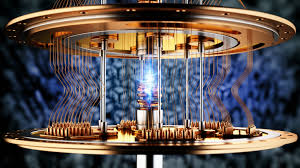
Building hardware that operates at extremely low temperatures and requires precise control systems adds to the complexity and cost. Furthermore, developing efficient quantum algorithms that outperform classical counterparts for practical tasks is still an ongoing research area.
Overall, these technical and engineering challenges must be overcome before practical, large-scale quantum computers become a reality.
Potential Applications of Quantum Computers in Industry
Quantum computers hold transformative potential across various industries by solving complex problems far beyond the reach of classical machines. In pharmaceuticals, they promise to accelerate drug discovery by simulating molecular interactions with unparalleled precision.
Financial institutions could leverage quantum algorithms to optimize portfolios and detect fraud more effectively. Manufacturing benefits from enhanced materials design, enabling the creation of stronger, lighter, and more efficient products.
Additionally, logistics companies may optimize routing and supply chains to reduce costs and environmental impact. The energy sector stands to gain through improved modeling of chemical reactions for cleaner fuels.
Although still emerging, the integration of quantum computing into industry is poised to revolutionize innovation and competitive advantage.
Quantum Algorithms That Could Revolutionize Computing
Quantum algorithms promise to revolutionize computing by harnessing the principles of quantum mechanics to solve problems far beyond the reach of classical computers. Unlike traditional algorithms, quantum algorithms leverage phenomena such as superposition and entanglement, allowing them to process vast amounts of information simultaneously.
This capability could transform fields like cryptography, optimization, and drug discovery by drastically reducing the time needed to perform complex calculations. Notably, algorithms like Shor’s algorithm threaten current encryption methods by efficiently factoring large numbers, while Grover’s algorithm speeds up database searches.
As quantum hardware advances, these algorithms could unlock unprecedented computational power, paving the way for breakthroughs in science and technology.
Role of Quantum Supremacy in Technology Advancement
Quantum supremacy marks a pivotal milestone in the evolution of technology, signifying the moment when quantum computers outperform classical counterparts in specific tasks. This breakthrough holds the potential to revolutionize fields such as cryptography, drug discovery, and complex system simulations by enabling computations previously deemed impossible.
As quantum machines harness the principles of superposition and entanglement, they can process vast amounts of data simultaneously, accelerating problem-solving capabilities. The advancement driven by quantum supremacy promises not only enhanced computational speed but also the creation of novel algorithms and innovative applications.
Consequently, this leap forward is expected to transform industries, improve artificial intelligence, and foster scientific discoveries, ultimately propelling technology into an era of unprecedented possibilities and efficiency.
Comparison Between Quantum and Classical Computer Speeds
Quantum computers operate on principles fundamentally different from classical computers, leveraging quantum bits or qubits that exist in multiple states simultaneously. This superposition enables quantum machines to process complex calculations much faster than classical counterparts, which rely on binary bits existing in a state of zero or one.
While classical computers excel in everyday tasks and are highly reliable for sequential operations, quantum computers show promise in solving specific problems like factoring large numbers, optimization, and simulating molecular structures exponentially faster.
However, quantum technology is still in its nascent stages, with challenges such as error rates and qubit coherence time limiting practical speed advantages. Overall, quantum computers are not universally faster but outperform classical machines in specialized tasks, representing a significant leap in computational speed and capability under the right conditions.
Ultimately
In conclusion, quantum computer technology holds the promise to revolutionize the way we solve complex problems, offering unprecedented speed and power beyond classical computers. As research continues to advance, we can expect to see transformative impacts across various fields such as medicine, cryptography, and artificial intelligence.
Thank you for reading this article—stay tuned for more exciting topics, and don’t forget to share with your friends! Goodbye!
